
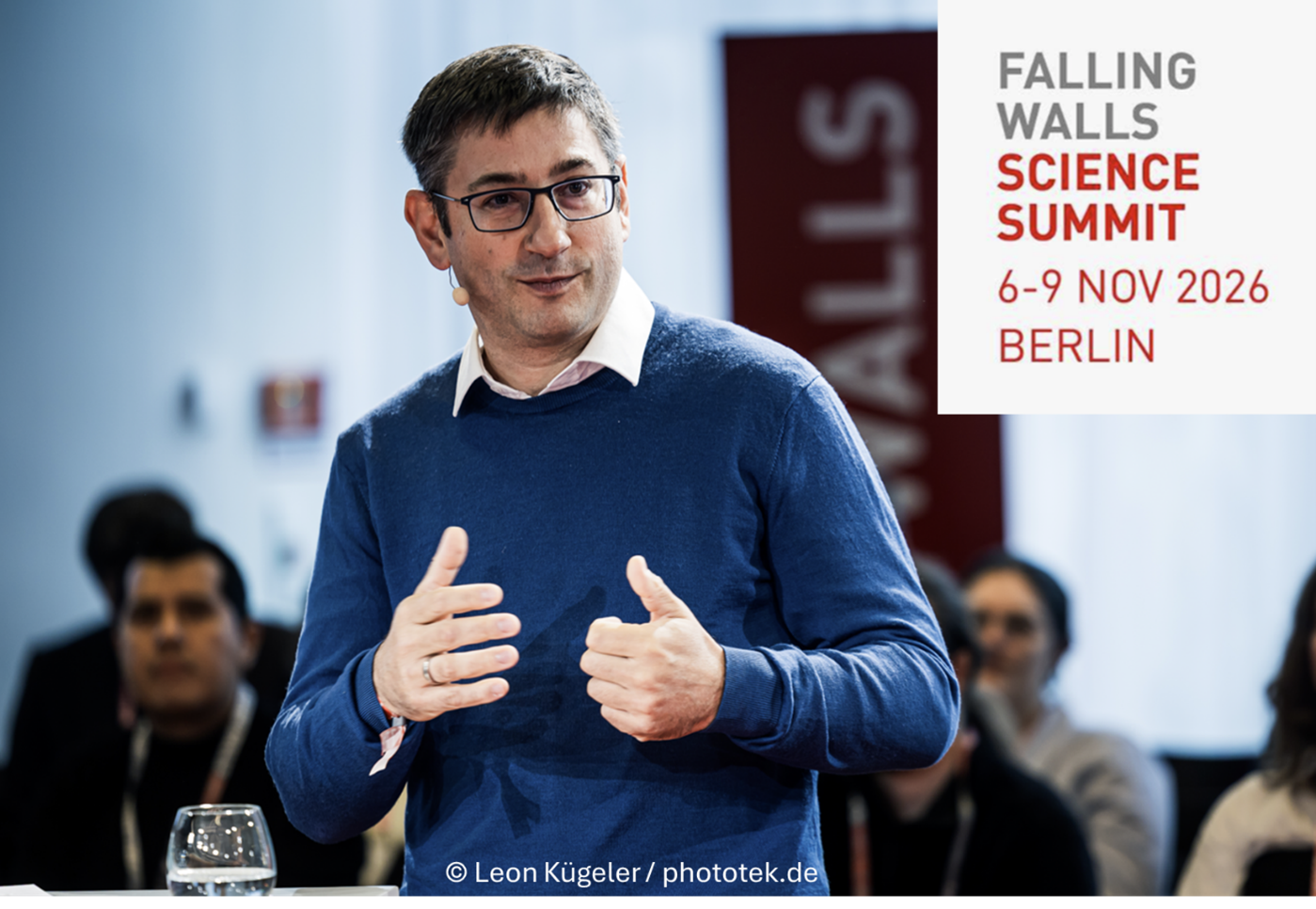
From Fusion Experiments to Power Plants: Christoph Kirchlechner at the Falling Walls Science Summit 2026
What technological choices must be made today to turn fusion research into industrial power plants? Christoph Kirchlechner discussed this question with representatives from industry and research at the Falling Walls Science Summit 2026.
Fusion research is increasingly moving towards industrial demonstration facilities. Yet achieving an energy gain in the plasma alone is not enough to deliver a technically and economically viable power plant. The round table therefore focused on how the various technologies can be integrated into a reliably functioning overall system.
Future demonstration facilities must sustain a self-heating plasma and breed sufficient tritium to secure their fuel supply. At the same time, key components such as gyrotrons must be designed for industrial manufacturing, maintenance and replacement. These decisions affect the entire power plant concept: choices made today will determine how fusion facilities can be built, operated and maintained in the future.
Together with Frank Laukien, CEO of Bruker, Kathleen O’Brien of Siemens Energy and Heather Lewtas of the UK Atomic Energy Authority (UKAEA), Kirchlechner discussed these challenges at the interface between research and industrial implementation. The session was moderated by Bernd Rech, Scientific Director of Helmholtz-Zentrum Berlin (HZB).
The discussion highlighted that the path to fusion power requires close integration of plasma physics, materials science and engineering with industrial manufacturing and plant design. The requirements of a future power plant must be considered from the outset when developing the next generation of demonstration facilities. With the BMFTR-funded fusion hubs – particularly the MAT-TRIx Hub currently taking shape on the KIT campus – an ecosystem is emerging that will enable breakthroughs through collaboration.
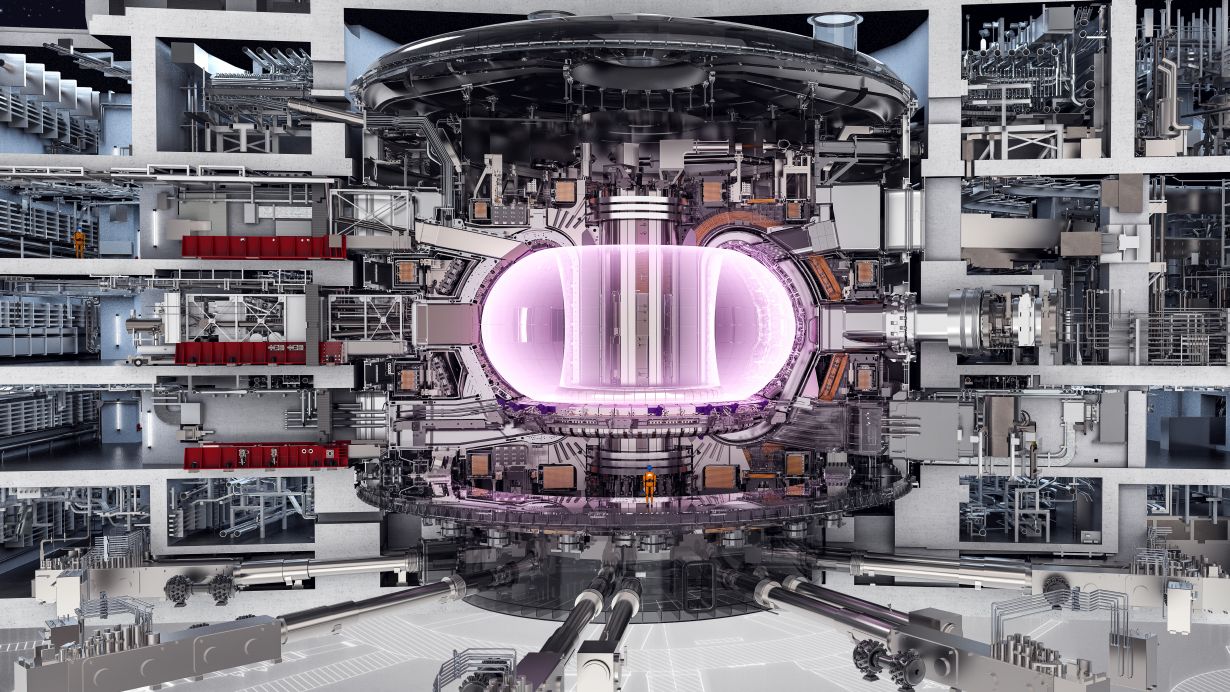
KIT wird Forschungshub für Fusionstechnologie
Beim Aufbau eines Fusionsreaktors setzt die Bundesregierung auf die Expertise des KIT. Für den geplanten Bau eines Fusionsreaktors in Deutschland richtet die Bundesregierung neue Forschungshubs ein. Eine zentrale Rolle übernimmt dabei das KIT: Forschende entwickeln hier Schlüsseltechnologien für den Brennstoffkreislauf, leistungsfähige Materialien sowie zentrale Reaktorkomponenten. Damit bringt das KIT seine Expertise in die Umsetzung der Fusionstechnologie ein und gestaltet den Weg von der Grundlagenforschung zur Anwendung maßgeblich mit.